Temp
Food
Flow
Difficulty
Getting to Know the Pink Spot Goby
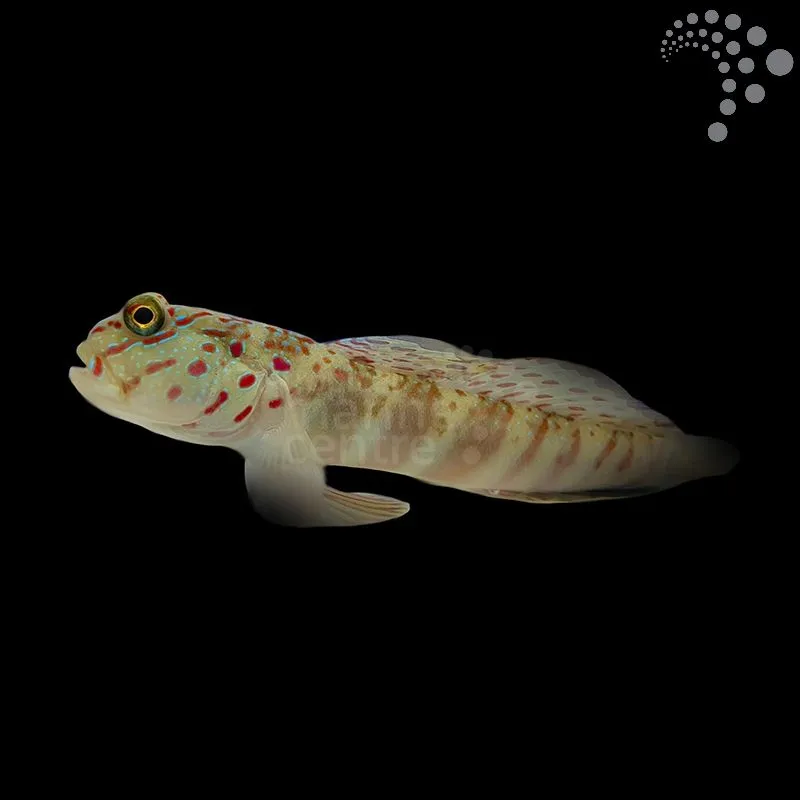
The Pink Spot Goby (Cryptocentrus leptocephalus), also known as the Pink-Spotted Shrimp Goby, is a peaceful bottom-dwelling marine fish known for its soft cream-coloured body, large expressive eyes, and signature pink or reddish spots scattered along its sides. This gentle species brings a subtle charm and a lot of practical value to a saltwater aquarium.
Native to sandy reef areas throughout the Indo-Pacific, the Pink Spot Goby typically grows to around 10–13 cm and is often seen perched on the substrate or hovering just above it. While it may not be the most flamboyant fish in the tank, it’s a firm favourite among aquarists for its personality, sand-sifting behaviour, and potential to pair with pistol shrimp.
Choosing Your Pink Spot Goby
When choosing a Pink Spot Goby, look for an individual that is alert, upright, and perched or sifting near the sand. A healthy goby should have clear eyes, defined markings, and steady breathing. Avoid those that are lying on their sides, have sunken bellies, or show signs of stress such as faded colours or damaged fins.
If possible, observe whether it is accepting prepared or frozen food, which can make the transition into your tank smoother.
Enter Your email to be sent this care guide
Tank Setup and Environment
Pink Spot Gobies are a great fit for reef tanks and peaceful community systems, but they do have a few specific needs. A minimum tank size of 100 litres is recommended, though larger systems provide more territory and stability.
The most important element of their environment is a soft sandy substrate, which they use for burrowing, resting, and sifting. Avoid coarse gravel, as it can irritate or injure them. Provide plenty of live rock for hiding and retreating—gobies often pick a favourite spot and return to it repeatedly.
These gobies are excellent jumpers, especially during the early days of settling in, so a secure, tight-fitting lid is essential.
They also do well in setups with moderate flow, which helps mimic natural reef zones and keeps detritus suspended for filtration.
Feeding and Nutrition
In the wild, Pink Spot Gobies feed on tiny invertebrates and organic particles they sift from sand. In captivity, they require a varied, protein-rich diet delivered to the substrate level where they naturally forage.
Offer a diet including:
Frozen mysis shrimp
Enriched brine shrimp
Finely chopped clam or prawn
Sinking marine carnivore pellets
Copepods or blackworms (if available)
Feed 2–3 times per day, ideally using a feeding pipette or baster to deliver food close to their location. Target feeding helps prevent them from being outcompeted by faster or more aggressive tank mates.
Behaviour and Compatibility
Pink Spot Gobies are peaceful, shy, and mostly bottom-oriented. They rarely show aggression unless housed with another goby of a similar shape and size in a small tank. They do best either singly or as a mated pair.
They’re reef-safe and won’t bother corals or invertebrates. In fact, they are famous for pairing with pistol shrimp, forming a symbiotic bond where the shrimp digs and maintains a burrow while the goby acts as a lookout. Watching this relationship unfold in your own tank is both fascinating and rewarding.
Suitable tank mates include:
Clownfish
Blennies
Dartfish
Firefish
Wrasses (reef-safe species)
Cleaner shrimp and hermit crabs
Avoid overly aggressive species or fast eaters that could stress the goby or outcompete it for food.
Water Conditions and Flow
Pink Spot Gobies are generally hardy but prefer clean, stable water. Like all marine species, they are sensitive to sudden changes, so maintain good husbandry and regular water testing.
Temperature: 24–27°C
pH: 8.1–8.4
Salinity: 1.023–1.025
Flow: Moderate
Perform regular water changes and monitor nutrient levels, particularly nitrate and phosphate, to maintain a healthy sand bed.
Health and Longevity
This species is resilient when cared for properly. They are prone to stress-related illnesses such as ich if water quality drops or if they’re bullied. With a stress-free environment, a secure burrow, and consistent feeding, they can live 5–7 years or more in captivity.
Always acclimate slowly, and consider using a quarantine tank to monitor new arrivals before introducing them into the main system.
Final Thoughts
The Pink Spot Goby is a wonderful choice for aquarists looking to add both functionality and gentle charm to their marine setup. Their sand-sifting habits help keep substrates clean, and their peaceful nature makes them easy to pair with a wide range of reef-safe species.
Give them the right environment—a soft sandy bed, plenty of hiding places, and a calm tank—and they’ll reward you with subtle beauty and calming behaviour for years to come.