Temp
Food
Flow
Difficulty
Getting to Know the Powder Blue Tang – Premium West Ind Ocean
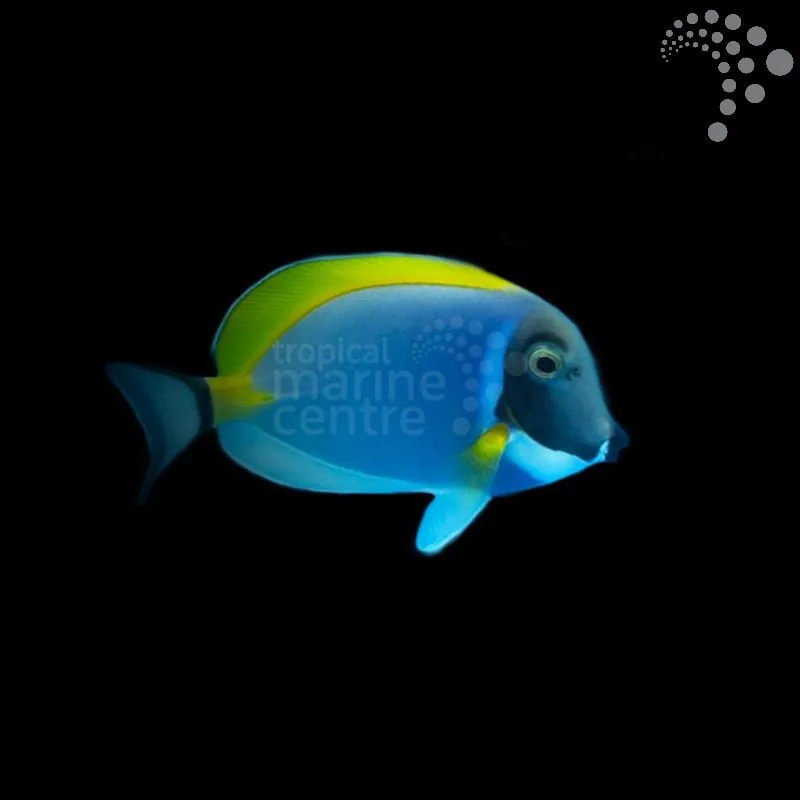
The Powder Blue Tang (Acanthurus leucosternon) is one of the most iconic and visually striking marine fish in the hobby. The Premium West Indian Ocean variant is especially prized for its vibrant contrast of powder blue, deep black, and bright yellow. With an elegant oval body and vivid colours that never fail to catch the eye, this tang adds instant energy and elegance to any large saltwater aquarium.
Native to the reef slopes and lagoons of the Indian Ocean, these tangs are active swimmers and algae grazers, known for their bold personalities and occasional feistiness. They typically grow to around 20–23 cm and thrive in spacious tanks with excellent water quality and high oxygen levels.
Choosing Your Powder Blue Tang
When selecting a Powder Blue Tang, especially a premium West Ind Ocean specimen, look for a deep, even colouration, no signs of frayed fins, and clear eyes. A healthy fish should be swimming confidently, grazing or exploring its surroundings. Avoid any individual that appears lethargic, breathes heavily, or has white spots or cloudy patches on the body, as these could indicate disease.
Tangs are prone to stress during transport, so it’s ideal to select one that has already acclimated to aquarium life and is eating well.
Enter Your email to be sent this care guide
Tank Setup and Environment
Due to their size and swimming behaviour, Powder Blue Tangs require a minimum tank size of 450 litres, though 600+ litres is preferable. They are constantly on the move, patrolling the tank and grazing on surfaces, so open swimming space is essential.
Incorporate plenty of live rock for algae growth and hiding spaces. Though they are mostly mid-water swimmers, they do retreat into rockwork when sleeping or startled.
Use a tight-fitting lid, as tangs can become spooked and are capable of jumping.
Ensure strong water flow to simulate their natural reef environment and help maintain oxygen-rich conditions. A powerful wave-maker and high-quality filtration system are essential.
Feeding and Nutrition
Powder Blue Tangs are primarily herbivores, though they benefit from some protein in their diet. Their health, colour, and behaviour improve with a varied and consistent feeding schedule.
Feed them:
Nori seaweed sheets (clipped to rocks or veggie clips daily)
Spirulina-based flakes and pellets
Frozen mysis shrimp and enriched brine shrimp (2–3 times per week)
Chopped clam or prawn meat (occasionally)
Algae wafers or marine herbivore blends
Feed 2–3 times daily, focusing on grazing opportunities to mimic their natural feeding behaviour. Keeping them well-fed also helps reduce aggression towards tank mates.
Behaviour and Compatibility
Powder Blue Tangs are known for being territorial and sometimes aggressive, especially toward other tangs or similarly shaped species. Introduce them as one of the last fish in the tank to help reduce territorial disputes.
Ideal tank mates include:
Clownfish
Wrasses
Gobies
Dwarf angels
Blennies
Cardinalfish
Avoid housing with other surgeonfish unless the system is very large and you have experience managing tang dynamics. Always monitor interactions closely in the first few weeks.
Water Conditions and Flow
Powder Blue Tangs require clean, stable, high-quality water. They are more sensitive than many other tangs and prone to marine ich (white spot disease) if stressed.
Temperature: 24–27°C
pH: 8.1–8.4
Salinity: 1.023–1.025
Flow: Strong, high-oxygen environment
Nitrates: <10 ppm
Perform frequent water changes and use a high-capacity protein skimmer. Consider running UV sterilisation to help reduce disease risk.
Health and Longevity
While they can be sensitive during acclimation, Powder Blue Tangs can thrive and live 8–10 years or more in captivity with the right care. Quarantine new fish before introducing them and provide a stress-free, well-fed environment to reduce the risk of disease.
They’re prone to parasites and HLLE (head and lateral line erosion) if water quality or diet is lacking, so consistency is key.
Final Thoughts
The Powder Blue Tang – Premium West Ind Ocean is a show-stopping fish that brings movement, colour, and character to advanced marine aquariums. While they do demand space, pristine water, and thoughtful tank mates, their reward is years of elegant presence and engaging behaviour.
With the right setup, patience, and routine care, this premium tang can become the star of your reef system—bold, beautiful, and undeniably captivating.