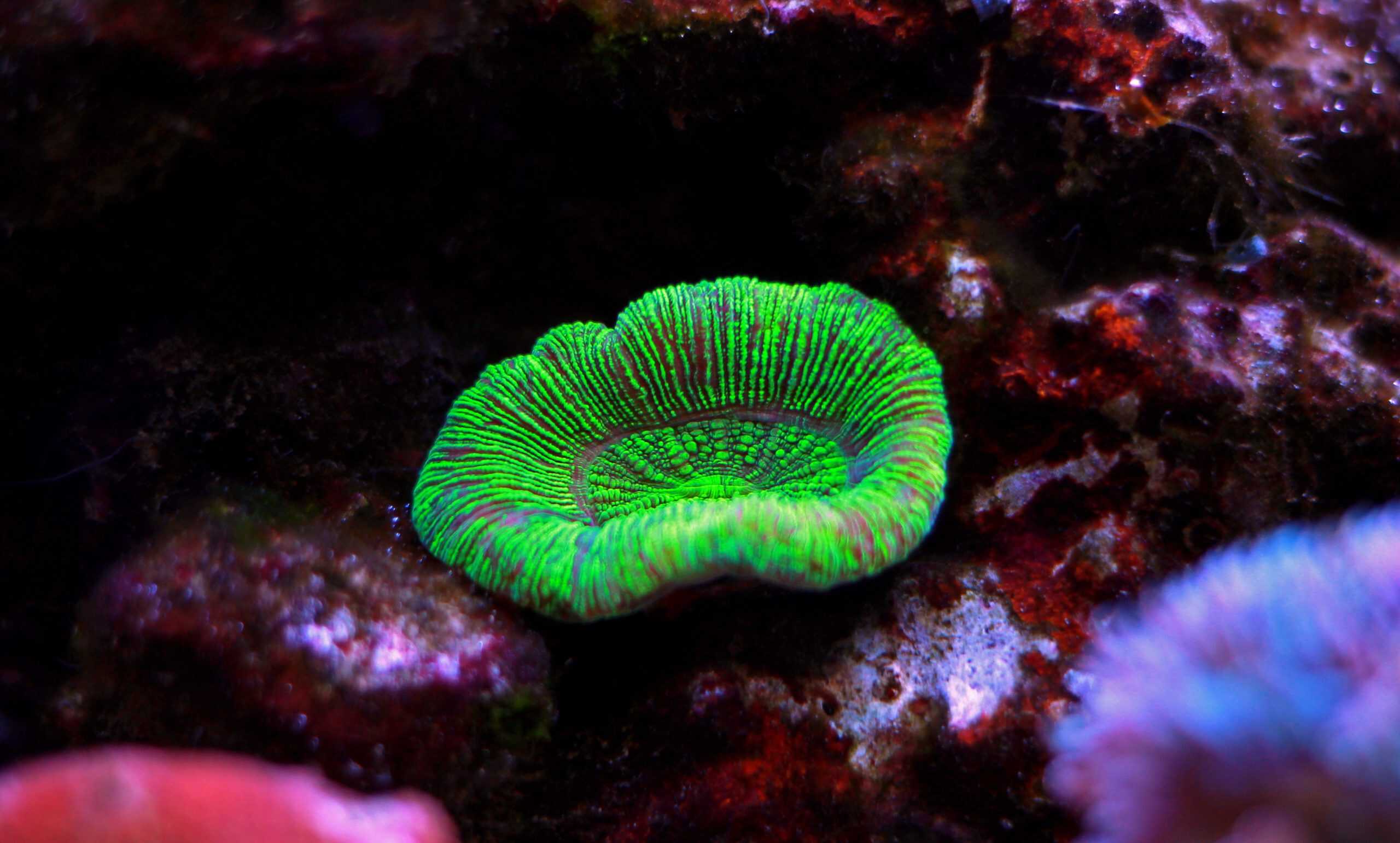
If you’ve ever walked past a reef tank and spotted what looks like a brightly coloured cushion sitting on the sand, chances are it was a Trachyphyllia Coral. Often called the Open Brain Coral, this large polyp stony (LPS) coral is famous for its bold folds, vibrant colours, and ease of care.
To help you get the best out of this coral, here’s a Q&A style guide covering everything you need to know.
What Exactly Is a Trachyphyllia Coral?
Trachyphyllia (commonly shortened to “Trachy”) is a fleshy, single-polyp coral that usually sits on the sandbed. It inflates during the day, showing off its meaty tissue, and often glows under blue light. Colours range from neon green and red to rainbow blends.
It’s considered one of the more forgiving LPS corals, making it a great choice for both beginners and experienced reefers.
Where Should I Place My Trachy Coral?
Best spot: The sandbed, away from aggressive corals.
Why the sandbed? The tissue is fleshy and easily damaged by sharp rock edges. On the sand, it has room to expand and looks more natural.
Distance: Leave space around it – although not aggressive, it can inflate quite a lot and doesn’t like being squashed.
What Kind of Lighting Do They Need?
Trachys prefer low to moderate light (PAR 50–120).
Too much light can cause bleaching or retraction.
If you’re running strong LEDs, shaded areas of the sandbed are often perfect.
Tip: Start them in lower light and only move upwards if you notice dull colouring.
How Much Flow Is Ideal?
Low, gentle flow is the key.
You want enough water movement to prevent detritus from settling, but not so much that the coral’s tissue is constantly moving.
Too much flow can cause the tissue to peel back from the skeleton.
Do Trachyphyllia Corals Need Feeding?
Yes, and they enjoy it! While they get nutrition from their zooxanthellae (algae living in their tissue), feeding helps them thrive.
Offer meaty foods like mysis shrimp, chopped prawns, or reef roids.
Feed at night or when feeder tentacles are out.
Once or twice a week is usually enough.
Top Tip: Target feeding with a pipette ensures food lands on the mouth, not wasted in the sand.
What Water Conditions Do They Like?
Like other LPS, Trachys do best with stable parameters:
Temperature: 24–26°C
Salinity: 1.025 SG
pH: 8.1–8.4
Alkalinity: 8–10 dKH
Calcium: 400–450 ppm
Magnesium: 1250–1350 ppm
Nitrates: 5–15 ppm
Phosphates: 0.03–0.1 ppm
What Problems Should I Watch For?
Receding tissue: Often from too much flow or unstable water.
Bleaching: Usually caused by strong lighting.
Damage from fish: Some fish (like butterflies or angels) nip at their fleshy tissue.
Are Trachy Corals Good for Beginners?
Yes – they’re one of the easiest LPS corals to keep. As long as you avoid high flow and too much light, they tend to be forgiving. Their bold colours also make them a favourite for those wanting a showpiece coral.
Why Are They Called “Open Brain” Corals?
When fully expanded, their tissue folds resemble the ridges of a brain – hence the name. At night, they often deflate slightly, exposing the skeleton more clearly.
Final Word
Trachyphyllia Corals are among the most striking and beginner-friendly LPS corals available. Place them on the sandbed, give them gentle flow, moderate light, and a weekly feeding, and they’ll reward you with years of growth and colour.
If you’re looking for a centrepiece coral that’s both beautiful and forgiving, the Trachy is a perfect choice.