If you’re new to reef keeping and want a coral that’s both hardy and visually impressive, Leather corals are one of the best places to start. Popular among UK marine hobbyists, these corals are known for their resilience, flowing polyps, and ease of care. This guide will walk you through everything you need to know about owning Leather corals – from the types available to their placement, feeding, and long-term care.
What Are Leather Corals?
Leather corals belong to the family Alcyoniidae and are soft corals rather than stony ones. Unlike hard corals such as Acropora or Montipora, Leather corals don’t build calcium skeletons. Instead, they have a leathery, flexible structure, which is where their name comes from. They add fantastic movement and texture to a reef aquarium and are highly forgiving when it comes to water conditions, making them perfect for beginners.
Popular types of Leather corals found in the UK include:
Toadstool Leather (Sarcophyton spp.) – recognisable by their mushroom-like cap and long polyps.
Finger Leather (Sinularia spp.) – with branches that resemble soft fingers swaying in the current.
Cabbage Leather (Lobophytum spp.) – layered and folded like a cabbage leaf.
Each has a slightly different look, but all share the same easy-care requirements.
Why Leather Corals Are Great for Beginners
Leather corals are often recommended as beginner corals because of their hardiness. They can tolerate a wide range of conditions and usually adapt well to different types of reef aquariums. Here are some key reasons why they’re ideal for first-time coral keepers in the UK:
Hardy and adaptable – they can survive small fluctuations in water quality that might harm more delicate species.
Fast growth – Leather corals grow steadily and can even be fragged once they’re established.
Low maintenance – they don’t require frequent feeding, relying mostly on photosynthesis and dissolved nutrients.
Visually appealing – their flowing polyps add movement and life to the tank.
Water Parameters and Tank Setup
While Leather corals are forgiving, maintaining stable water parameters will keep them at their best. Aim for the following ranges in your UK reef tank:
Temperature: 24–26°C
Salinity: 1.024–1.026 specific gravity
pH: 8.1–8.4
Alkalinity: 8–12 dKH
Nitrate: < 10 ppm
Phosphate: < 0.1 ppm
A standard reef setup with live rock, good circulation, and an efficient filtration system is usually enough. They don’t demand ultra-low nutrients like SPS corals, but stable conditions are still important.
Lighting Requirements
Leather corals are photosynthetic, meaning they rely on their symbiotic zooxanthellae algae for energy. Moderate to high lighting works well, but they are very adaptable. Most UK reefers find success with LED reef lights, which allow easy control of intensity and spectrum.
If you’re running a mixed reef, place your Leather corals in moderate light zones where they can thrive without overshadowing more light-demanding SPS. Too much light can cause them to close up, while too little can slow their growth.
Water Flow and Placement
Leather corals prefer moderate to strong water flow. This helps keep them clean by washing away detritus and mucus that they shed as part of their natural cycle. Without sufficient flow, they may struggle to “slough off” this layer and can look dull or unhealthy.
When placing your Leather coral:
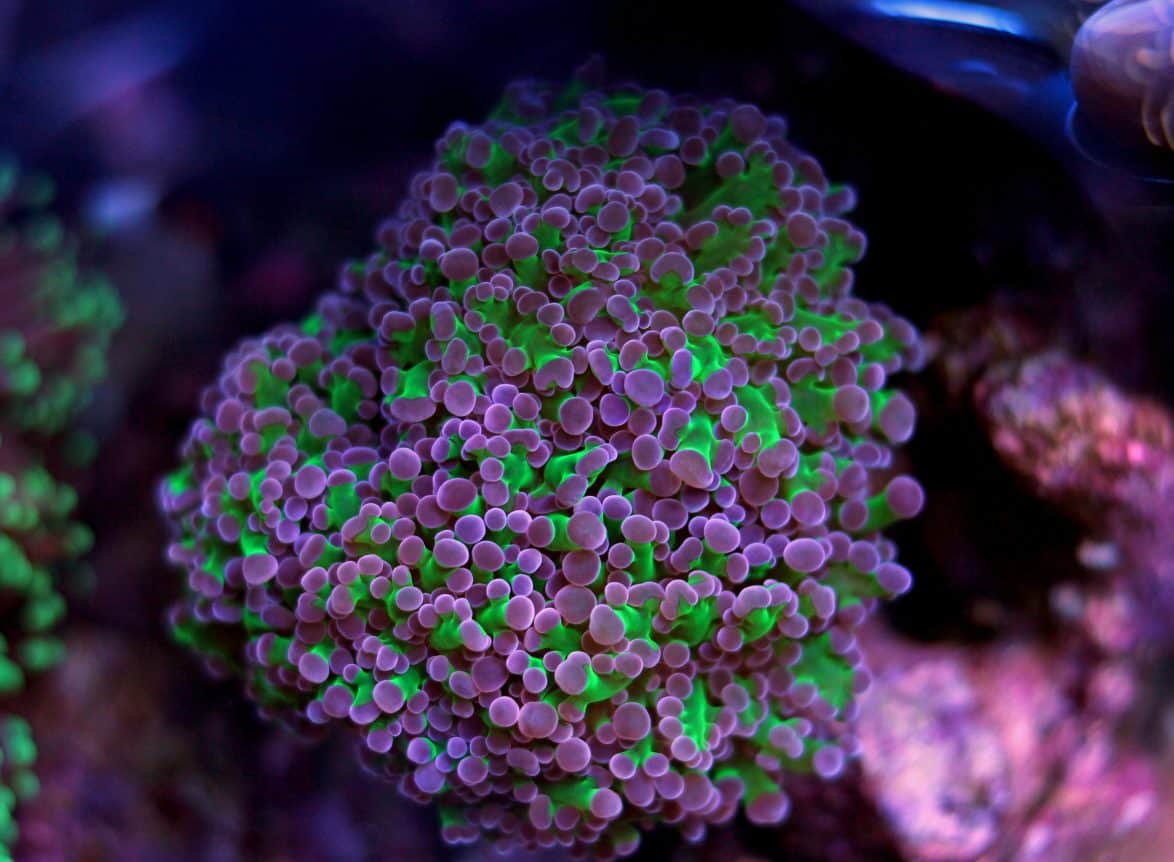
Keep them away from aggressive neighbours such as Euphyllia (Hammer, Torch, Frogspawn) that can sting them.
Give them space – they can expand significantly once settled.
Avoid dead spots with little circulation.
Feeding Leather Corals
Leather corals don’t require direct feeding. They get most of their nutrition from photosynthesis and absorbing dissolved organic matter. That said, some aquarists notice faster growth and improved colour when supplementing with coral foods such as phytoplankton or amino acids.
If you choose to feed, do so sparingly – overfeeding can raise nutrient levels, which may lead to algae issues in your reef tank.
Common Leather Coral Behaviours
Don’t panic if your Leather coral closes up and looks sulky for a few days. It’s perfectly normal for them to enter a “shedding” phase where they form a waxy layer that peels away. This process helps them remove algae, detritus, and bacteria from their surface. After shedding, they usually re-open with brighter colour and longer polyps.
Fragging and Propagation
One of the joys of keeping Leather corals is how easy they are to frag. Once your coral has grown large, you can cut a branch or slice from the mother colony and attach it to a frag plug or small piece of rock. With time, the frag will heal and grow into a new coral – perfect for sharing with fellow UK reefers or expanding your own tank.
Potential Issues
Although hardy, Leather corals can face a few problems if conditions aren’t right:
Persistent closure – usually a sign of poor flow, lighting stress, or nearby aggression.
Algae overgrowth – can happen if nutrients are too high.
Chemical warfare – some Leather corals release toxins that can irritate sensitive neighbours. Running activated carbon in your system helps prevent this.
Final Thoughts
Leather corals are one of the best beginner-friendly choices for UK reef keepers. They’re hardy, adaptable, and full of personality, adding motion and beauty to any saltwater aquarium. With proper placement, stable water conditions, and moderate lighting, your Leather coral will thrive and reward you with years of growth.
Whether you’re starting your very first reef tank or adding to an established system, Leather corals are a fantastic investment in both aesthetics and ease of care.