Temp
Food
Flow
Difficulty
Getting to Know the Rock Beauty
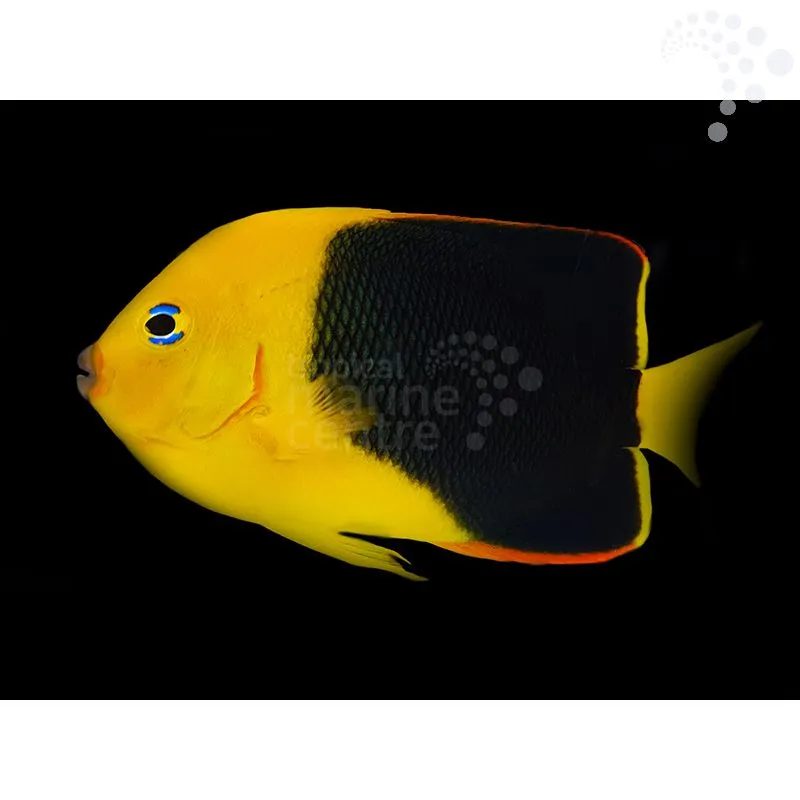
The Rock Beauty (Holacanthus tricolor) is a striking marine angelfish known for its vivid yellow front half and contrasting dark blue-black rear. This dramatic colouring, along with its confident swimming style and curious nature, makes it a standout choice for aquarists looking to add visual impact to a larger marine setup.
Native to the tropical Western Atlantic, including the Caribbean Sea and Gulf of Mexico, Rock Beauties thrive in coral-rich reefs and rocky outcrops. They can reach up to 20 cm in length and are best suited to experienced hobbyists due to their specialised dietary needs and selective nature.
Choosing Your Rock Beauty
When selecting a Rock Beauty, opt for a specimen that is actively swimming, alert, and curious about its surroundings. Healthy fish will display deep, rich colours, fully extended fins, and clear eyes. Avoid any that show signs of clamped fins, laboured breathing, or white patches.
Ask whether the fish has been feeding well, especially on prepared marine angelfish diets. Rock Beauties can be picky eaters, so a good appetite is a big plus during acclimation.
Enter Your email to be sent this care guide
Tank Setup and Environment
Rock Beauties need at least 300 litres of space to swim freely, with plenty of live rock for grazing and hiding. Their natural habitat consists of rocky reef faces and coral structures, so try to recreate that with caves, arches, and overhangs in your aquascape.
They prefer a well-established, mature aquarium with stable conditions. These angelfish can be territorial, particularly toward similar-sized tank mates or other angelfish, so provide multiple hiding places and defined zones within the rockwork.
Although they can be kept in reef tanks with caution, Rock Beauties are generally not reef-safe. They are known to nip at soft corals, LPS, clam mantles, and sponge colonies, which can become an issue in coral-heavy systems.
Feeding and Nutrition
Feeding the Rock Beauty correctly is vital for its health and colouration. In the wild, they feed heavily on sponges, tunicates, and algae. Replicating this in captivity can be challenging, but a specialised and varied diet is essential.
Feed a combination of:
- Marine angelfish pellets with sponge content
- Frozen mysis and brine shrimp
- Chopped clam, squid, and shrimp
- Nori seaweed
- Spirulina-based flakes and pellets
- Frozen sponge-based angelfish blends
Feed small amounts 2–3 times daily, making sure they’re eating a mix of plant- and protein-based foods. Over time, a well-fed Rock Beauty will show intense colouring and steady growth.
Behaviour and Compatibility
Rock Beauties are semi-aggressive and should be kept with similarly tempered tank mates. Avoid housing them with other large angelfish unless you have a very large system with enough space to establish individual territories.
Suitable companions include:
- Wrasses
- Tangs
- Dwarf angelfish (with caution)
- Clownfish
- Blennies
- Larger gobies
Avoid delicate, shy, or small fish that may be bullied or outcompeted for food.
Water Conditions and Flow
To thrive, Rock Beauties require clean, stable water and strong biological filtration. They are sensitive to water quality, especially elevated nitrate or phosphate levels, so a regular maintenance schedule is important.
Temperature: 24–27°C
pH: 8.1–8.4
Salinity: 1.023–1.025
Flow Rate: Moderate
Nitrates: Below 15 ppm
A protein skimmer and quality mechanical filtration will help maintain water clarity and stability. Moderate flow mimics their natural reef environment and helps distribute food and oxygen effectively.
Health and Longevity
Rock Beauties can live for 10 years or more in captivity if provided with the right diet and environment. They are prone to nutritional deficiencies if not fed properly, so dietary variety is essential. Quarantine is recommended before adding them to your display tank to prevent the introduction of parasites like ich or marine velvet.
Their vibrant colours can fade under stress or if malnourished, so it’s important to monitor both their behaviour and appearance regularly.
Final Thoughts
The Rock Beauty is a stunning marine angelfish with plenty of personality and charm, but it does come with some challenges. Best suited to experienced aquarists, it thrives in large, mature tanks with stable water quality and a carefully managed diet. If you’re ready to invest the time and attention this beautiful fish deserves, the Rock Beauty will reward you with years of colour, movement, and intrigue.