Temp
Food
Flow
Difficulty
Hammer Corals Care Guide: Lighting, Flow, and Placement for Growth
When it comes to adding movement, colour, and life to a reef tank, few corals are as iconic as the Hammer Coral. Recognisable by its hammer- or anchor-shaped tentacles, this large polyp stony (LPS) coral is a favourite among reef keepers for its striking appearance and relatively forgiving care requirements. But like all corals, success with hammers relies on understanding their needs when it comes to lighting, flow, and placement.
In this guide, we’ll cover the essentials of Hammer Coral care to help you grow a healthy, thriving colony in your reef aquarium.
What Makes Hammer Corals Special?
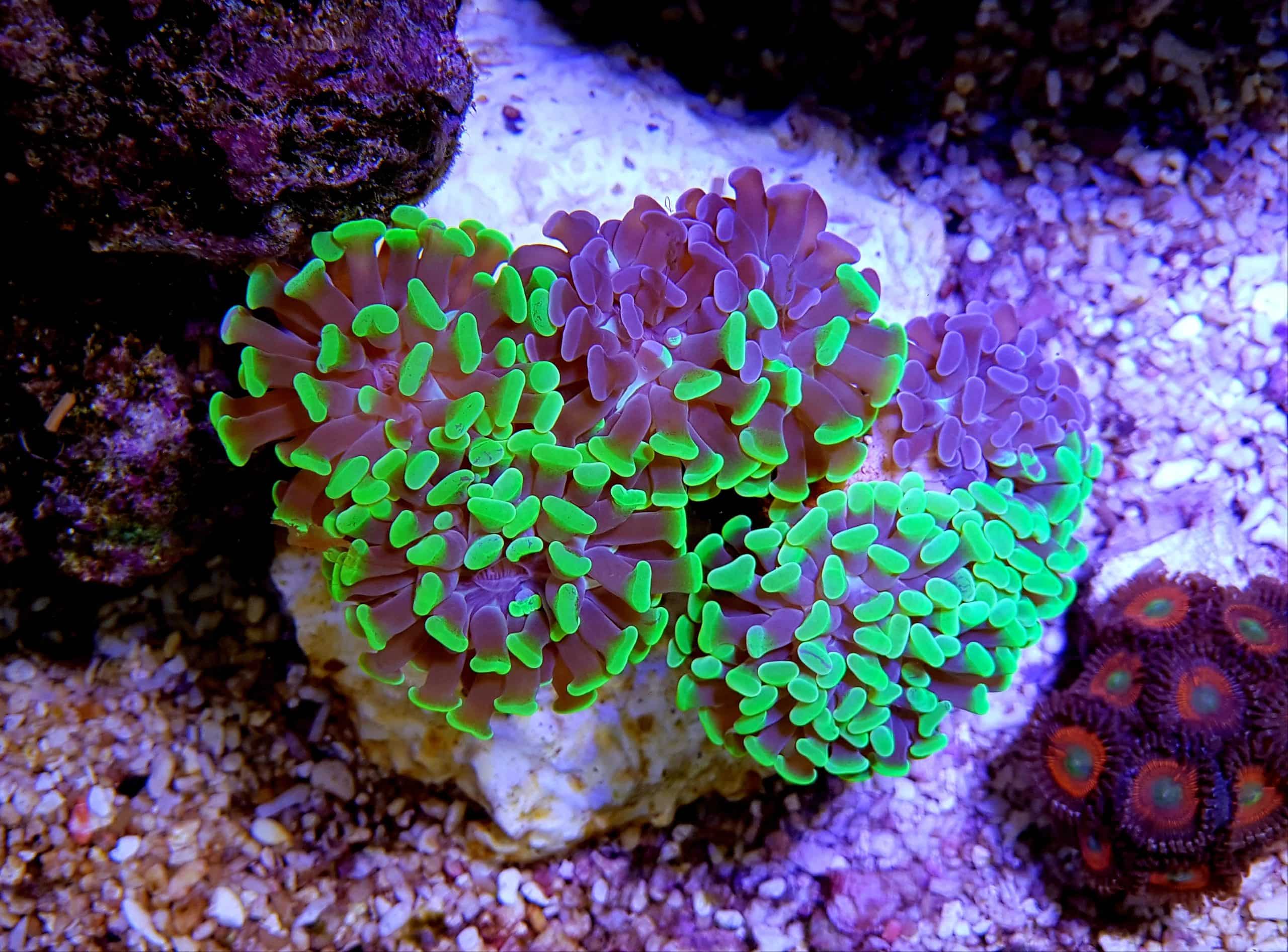
Hammer Corals (genus Euphyllia, often reclassified as Fimbriaphyllia) are prized for their flowing tentacles that sway with the current, creating a dynamic and eye-catching effect in the tank. They come in several colour morphs, ranging from vibrant greens and golds to rarer multi-coloured varieties that are highly sought after by collectors.
They’re also closely related to Torch and Frogspawn corals, but the Hammer stands out for its distinctive hammer- or anchor-shaped tips.
Ideal Lighting for Hammer Corals
Hammer Corals aren’t overly demanding when it comes to lighting, which makes them suitable for a wide range of reef setups. The key is finding a balance. Moderate to high lighting works best. Too little and they may stretch or lose colour, too much and they risk bleaching. Aim for a PAR (Photosynthetically Active Radiation) of 80–150. This range mimics their natural habitat on reef slopes where they’re exposed to filtered sunlight.
LED, T5, or hybrid systems all work well – consistency is more important than intensity spikes.
A good trick is to start your Hammer Coral lower in the tank and gradually move it upwards if you feel it needs more light. This avoids shock and lets you find the sweet spot for your individual coral.
Water Flow Requirements
Flow is crucial for Hammer Corals, not just for feeding but also for keeping their tissue healthy and free from detritus. Moderate, indirect flow is ideal. You want their tentacles to sway gently rather than being blasted.
Too much direct flow can cause the flesh to recede from the skeleton, which often leads to infections. Too little flow, on the other hand, allows waste to settle and can cause the coral to sulk.
Placing them where they get a nice, rolling movement without whipping around is perfect. If you’re using controllable wavemakers, a pulsing or random mode is usually best.
Placement in the Tank
Choosing the right spot for your Hammer Coral can make or break its success. Mid to lower areas of the tank usually work best, depending on your lighting strength.
Leave plenty of space – Hammer Corals have sweeper tentacles that can sting nearby corals, especially SPS or other LPS species. Keep them away from aggressive corals, but grouping them with other Euphyllia (like Torch or Frogspawn) often works since they tolerate each other better.
Remember that as your Hammer grows, it will expand considerably, so think ahead when giving it space.
Feeding Hammer Corals
While they get much of their nutrition from light via zooxanthellae (symbiotic algae living in their tissue), Hammer Corals also benefit from target feeding.
Offer meaty foods like mysis shrimp, brine shrimp, or specialised coral foods. Feeding once or twice a week is usually enough. Target feeding with a turkey baster or pipette helps ensure food lands directly on the polyps without wasting food in the water column.
This extra nutrition can promote faster growth and brighter colouration.
Water Parameters
Like most LPS corals, Hammers appreciate stability above all else. Ideal conditions include:
Temperature: 24–26°C
Salinity: 1.025 SG
pH: 8.1–8.4
Alkalinity: 8–10 dKH
Calcium: 400–450 ppm
Magnesium: 1250–1350 ppm
Stable parameters help prevent stress and keep their tissue fleshy and extended. Sudden swings are often the biggest cause of problems.
Common Issues with Hammer Corals
Even with the best care, Hammer Corals can run into issues. Tissue recession is often due to too much flow, poor water quality, or insufficient calcium/alkalinity. Brown jelly disease is a bacterial infection that can spread quickly. Affected heads should be removed and dipped immediately.
Bleaching is usually caused by too much light or sudden changes in conditions.
Prevention is always better than cure, so keeping parameters stable and observing your coral regularly goes a long way.
Why Keep Hammer Corals?
Not only are they visually stunning, but Hammer Corals are also one of the more forgiving LPS species, making them suitable for intermediate reef keepers. They add instant movement and colour, and with proper care, can grow into large, impressive colonies.
For many hobbyists, a swaying Hammer Coral is the centrepiece of their tank – proof that a thriving reef is within reach when you give your corals the right care.
Final Thoughts
Hammer Corals are a brilliant addition to almost any reef tank. With moderate lighting, gentle flow, and stable water conditions, they can thrive for years and even be propagated into new colonies. By understanding their needs and respecting their space in the aquarium, you’ll be rewarded with one of the most mesmerising and charismatic corals available in the hobby.
If you’re looking to bring both beauty and movement into your reef, the Hammer Coral is hard to beat.