If you’re looking for a coral that offers endless colour variety, fast growth, and beginner-friendly care, Zoanthids – often called “Zoas” – are an ideal choice. Hugely popular among UK reef keepers, Zoanthids are vibrant, hardy soft corals that can transform your aquarium into a living rainbow. This guide covers everything you need to know about keeping Zoanthids healthy and thriving, from water parameters and lighting to placement and feeding.
What Are Zoanthid Corals?
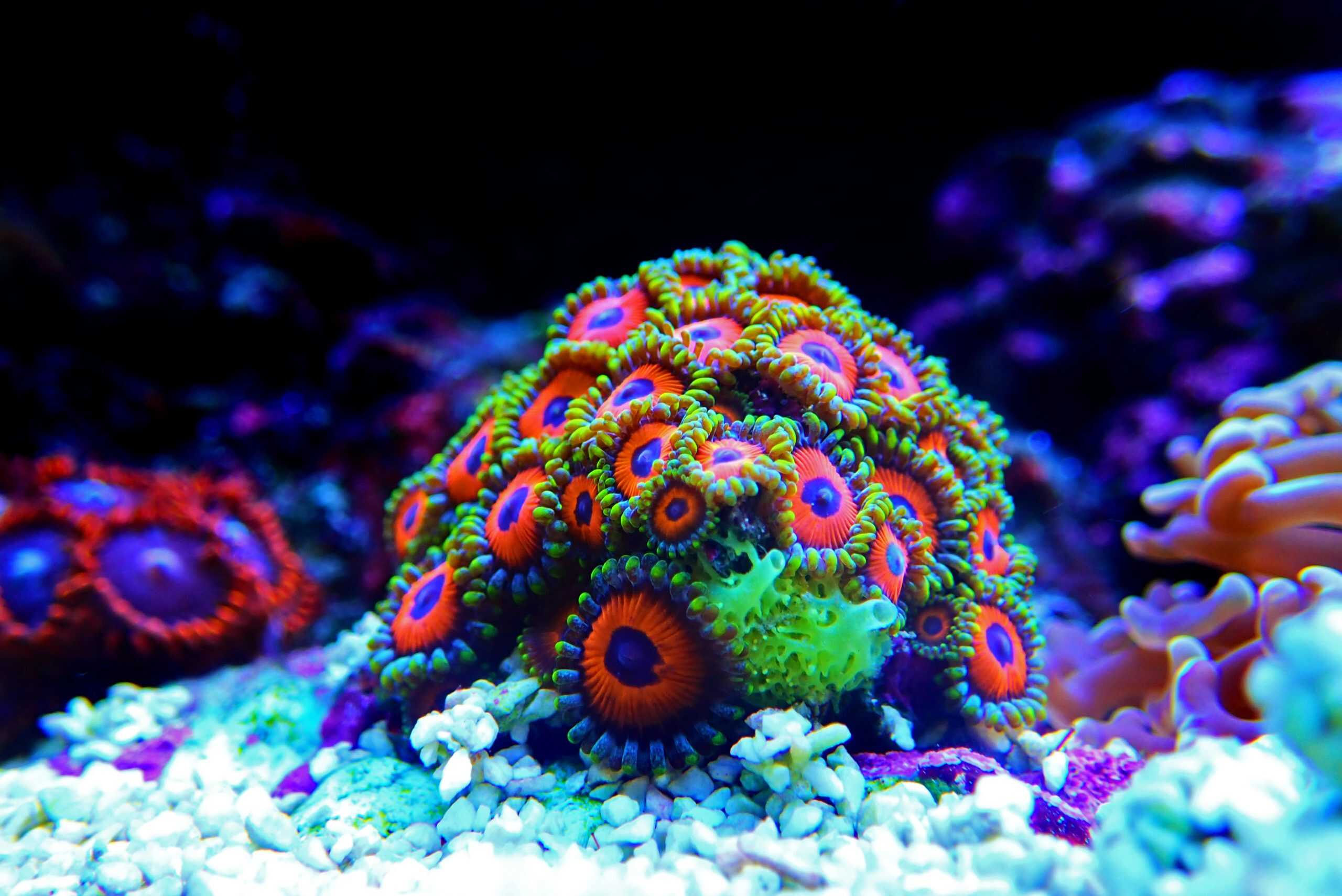
Zoanthids (Zoanthus spp.) are colonial soft corals that grow in mats or clusters of small polyps. Each polyp resembles a tiny flower, making them one of the most visually appealing corals for reef aquariums.
They come in an incredible range of colours and patterns, often named by hobbyists with creative titles such as “Rastas,” “Eagle Eyes,” or “Radioactive Dragon Eyes.” This variety makes Zoas highly collectable within the UK reefing community.
Why Zoanthids Are Popular in UK Reef Tanks
There are several reasons why Zoanthids are such a favourite among reef keepers:
Huge colour variety – from neon greens to deep purples and multicolour morphs.
Beginner-friendly – hardy, adaptable, and forgiving of minor water fluctuations.
Affordable and widely available – easy to source in UK fish shops and online coral retailers.
Fast growth – quickly spread across rocks, creating vibrant carpets of colour.
Fragging potential – easy to propagate and share with other hobbyists.
Ideal Water Parameters
Zoanthids are not demanding corals, but stable conditions are key to keeping them open and colourful. Aim for:
Temperature: 24–26°C
Salinity: 1.024–1.026
pH: 8.1–8.4
Alkalinity: 8–12 dKH
Nitrate: 2–15 ppm
Phosphate: 0.03–0.1 ppm
They tolerate slightly higher nutrients than many SPS corals, making them ideal for mixed or beginner reef tanks.
Lighting Requirements
Zoanthids thrive under moderate lighting, though some morphs prefer higher intensity for full colouration. Under blue LED reef lighting, Zoas often fluoresce brilliantly, making them a centrepiece coral.
If you’re unsure, start them in moderate light areas and adjust placement as needed. Watch how the polyps respond – stretching upwards usually indicates they need more light, while staying closed can suggest too much intensity.
Water Flow and Placement
Zoanthids prefer moderate water flow. This helps keep detritus from settling on them while allowing the polyps to open fully. Avoid placing them in very strong currents, as this can cause them to remain closed.
For placement:
Place them on flat rocks or frag plugs where they can spread.
Keep them away from aggressive corals with long sweeper tentacles.
Consider dedicating a “Zoa garden” rock to showcase multiple morphs together.
Feeding Zoanthids
While Zoanthids gain most of their nutrition from photosynthesis, they can benefit from occasional feeding. They’ll accept:
Phytoplankton
Zooplankton
Reef roids or powdered coral foods
Target feeding is optional but can encourage faster growth and improved colour.
Growth and Propagation
One of the most exciting aspects of Zoanthids is their ability to spread quickly. Over time, they form colourful mats across your rockwork.
Fragging Zoas is straightforward – simply cut a small section of the mat or remove a few polyps and attach them to a frag plug. This makes them popular for trading within the UK reefing community.
Common Issues
Although hardy, Zoanthids can experience issues if tank conditions aren’t ideal:
Closed polyps – may indicate poor water quality, lighting stress, or pests.
Pests – such as nudibranchs or sundial snails, which specifically target Zoas.
Overgrowth – they can spread aggressively and cover nearby corals.
Palytoxin risk – some Zoanthids and Palythoa species contain a powerful toxin. Always wear gloves and eye protection when handling or fragging Zoas.
Final Thoughts
Zoanthids are one of the most rewarding corals for beginners and experienced UK reef keepers alike. Their endless colour combinations, ease of care, and rapid growth make them a staple in the marine aquarium hobby.
Whether you want a small frag of bright polyps or a full “Zoa garden” covering your aquascape, Zoanthids will bring life and vibrancy to your reef tank with minimal fuss. With stable conditions and proper placement, Zoanthids can flourish for years, making them a must-have coral for any hobbyist.